

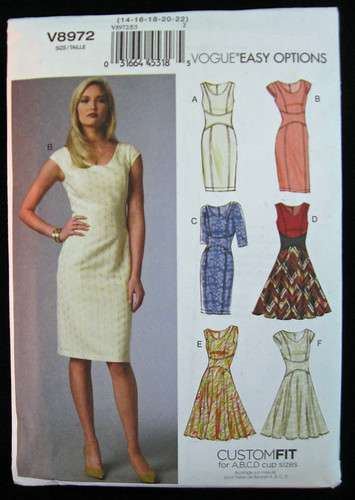
However I really don't like sewing on black, particularly one that is very matte and makes it so difficult to see the stitches. My habit of late night sewing and black wool crepe are not a good combo, thus the early morning bright spring daylight sewing. On a different note, I am not really liking this pattern, in terms of fitting on a woven fabric. I have seen some nice versions in ponte knit or other knits and that allows a bit of leeway in fitting that a woven does not. Anyway enough grumbling, huh?
But let's return to my post subtitle: Why you need a presscloth.
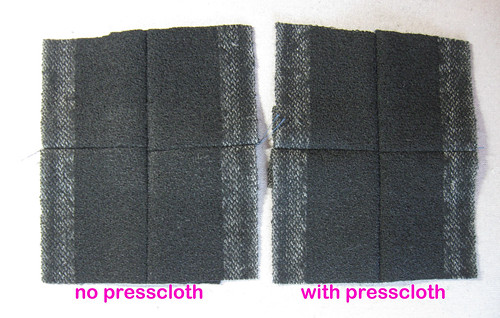
Wool crepe in any color but particularly the dark colors are very susceptible to getting a shine from pressing. And I think it looks terrible. I been known to recut sections of a garment if I erroneously touched iron to fabric without using a presscloth. So here I have made a few examples and brutally treated this first one, with no presscloth or trimming. Check out the result.
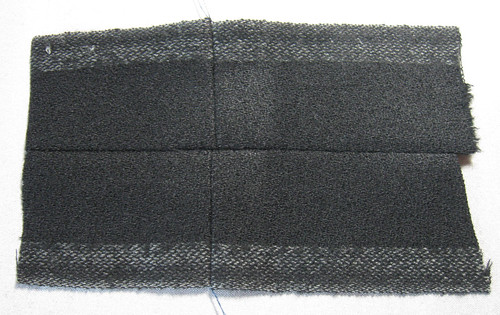
Did you see how many seams and junctures this dress has? Then imagine every one with that shiny spot outlining the seams underneath. OK, I get very worked up about stuff like this but it is easily prevented. First things first:
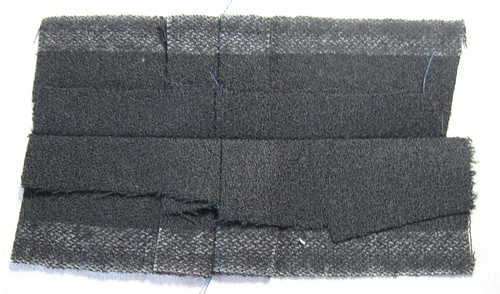
Trimming - my favorite little sewing task. I was saying to Elizabeth last weekend that I am a mad trimmer - every little junction and intersection is de-lumpified. Because as is, there are 4 layers of fabric at each corner there. On a waistband there can be up to 8 layers, so you can always remove some. Just like this until you have a nice little collection of 1/2 in squares littering your floor (if you are like me and let everything fall to be vacuumed later...much later).
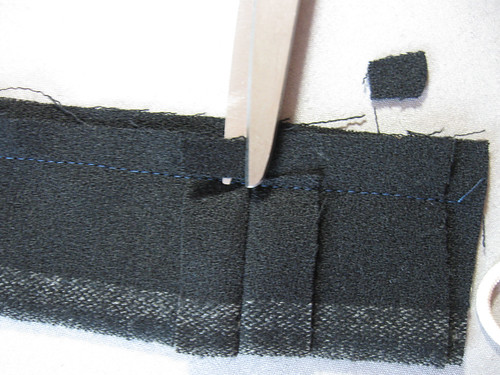
The result is a nice un-shiny outside that is slightly flatter and blends in better with the rest of the garment. Also I was off a tiny fraction when I sewed the example on the left but you get the idea. This Vogue pattern calls for a lot of exactitude on the side seams so those diagonal lines meet up. Stay tuned for my result. And fingers crossed.
Another key to good pressing on this dress is to press these seams on the edge of the pressing board. See below where I have the waist seam over the padded edge of the multi-press board and am just flattening the center of the seam, taking care not to mash the edges of the seam allowance.
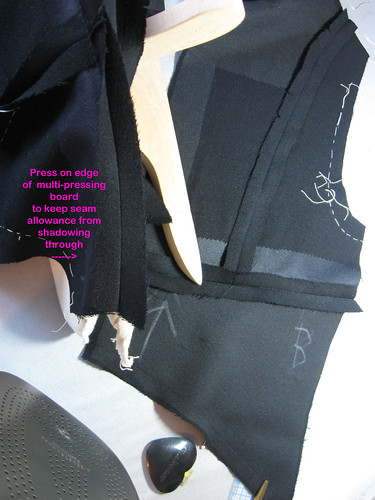
You can also see that I label all the pieces with chalk, particularly when using a fabric that is SO the same on either side. I immediately put chalk marks on the opposing pieces even before I remove my pattern papers. Also on pieces that can be confusing, like this waist section I find it helpful to put arrows so I know which edge goes to the upper bodice etc.
Another thing you can see is lots of fusible interfacing. I was reading an old post on Fashion Incubator the other day and she wrote that most home sewers do not use enough interfacing. If you take apart a dress you will see fusible everywhere, on most any edge. This Vogue 8972 has a lot of bias edges so I applied knit fusible everywhere, bottom edges, top of the skirt pieces, around the neckline etc. I also think it helps maintain a crisp press on the seams and if I want to catch stitch down the seam allowances I can sew to the fusible they they will be hidden.
One last look at this multi-pressing board. It sits on any edge and has the little padded cover so it is really useful, curves, points etc. I never see them in stores but I do see them on Ebay and Etsy (look for June Tailor pressing board). Also for this black wool crepe I did some test swatches for pressing, various press cloths, different fusible interfacings etc and found that the cotton presscloth gave the best result. The silk organza presscloth didn't keep the shine away. Interesting...
That is the cotton one on the left under the yellow spool. I buy them at the big fabric store when they have the half off sale, they are pretty cheap and it is better than fooling around making something.
That is the cotton one on the left under the yellow spool. I buy them at the big fabric store when they have the half off sale, they are pretty cheap and it is better than fooling around making something.
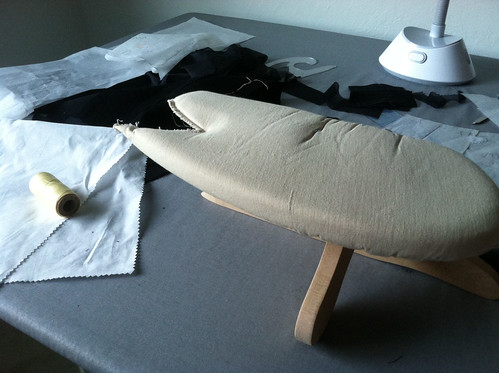
That's all for now, just a dress in pieces waiting to be put together for a fitting. When I mentioned above that I thought this dress was a bit tricky to fit, it was mostly the sleeves which are causing me trouble. But I have some ideas cooking so time and experimentation will hopefully solve this issue.
Happy spring sewing and watch your pressing! Beth
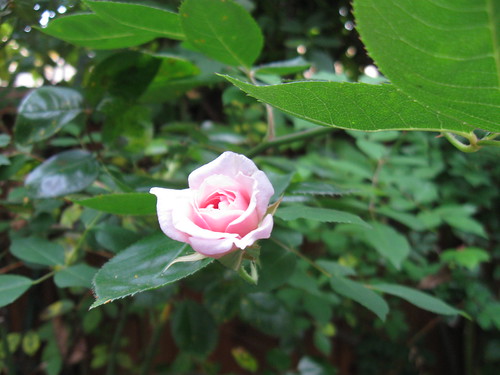
Today's SunnyGal garden picture. This Cecile Brunner rose bush lives next to the lemon trees and puts out masses of these tiny pink blooms, but I didn't realize it was a single bloomer or whatever they call these roses that only bloom once a season. Of course it grows like crazy, intertwines into the lemons, is full of thorns and it quite a challenge to prune. With the lemon and orange blossom scent plus the rose fragrance that side of the house is intoxicating this week.





0 Comments